
Backlink Quality: What Makes a Backlink Valuable for SEO?
Many SEO discussions around backlinks focus too much on quantity. That is usually the wrong place to start. A website with fewer strong links can outperform a website with many weak ones, especially in competitive search results.
That is why backlink quality matters far more than backlink count. A good backlink is not just a link that exists. It is a link that comes from the right context, supports the right page, and reinforces trust in a way that makes sense for users as well as search engines.
This article explains what backlink quality means, why it matters, how to evaluate it, and what businesses often misunderstand when building links.
What Is Backlink Quality?
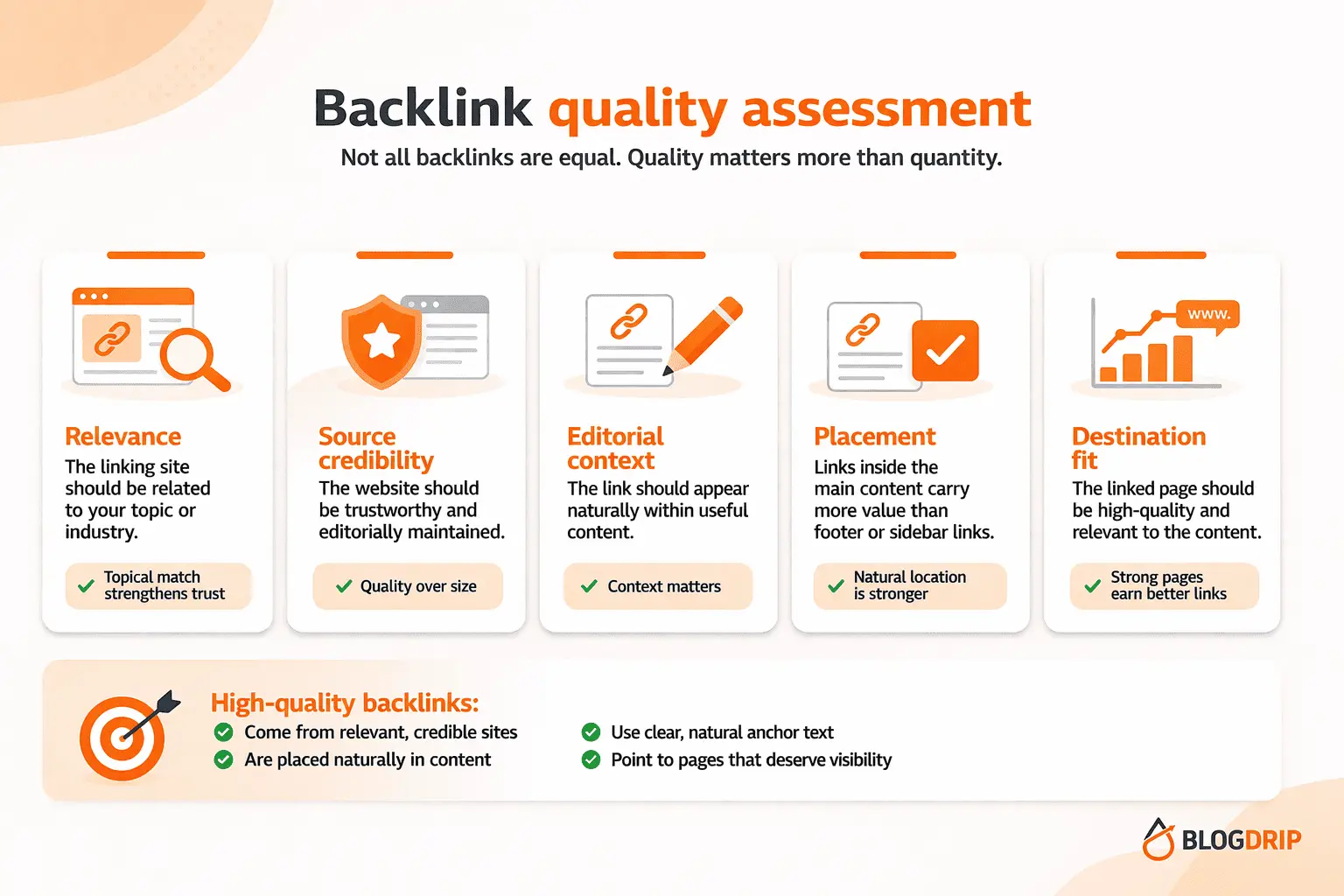
Backlink quality refers to the value and credibility of a backlink based on factors such as relevance, source trust, editorial context, placement, and destination page fit.
A backlink from a respected, topic-relevant website is generally much more valuable than a backlink from a low-quality or unrelated source. The difference is not just technical. It reflects whether the link is a meaningful endorsement or just a weak placement.
In practical terms, backlink quality is about asking whether the link deserves to exist. If the answer is yes from both a user and editorial perspective, the link is more likely to be strategically useful.
A practical definition
A high-quality backlink usually has several traits:
- it comes from a relevant website or page
- it is placed naturally within useful content
- it points to a page worth referencing
- it supports readers, not just rankings
- it fits the wider topic and brand context
Not every good backlink needs to be from a huge publication. Relevance and editorial fit often matter more than raw size.
Why Backlink Quality Matters
Backlinks remain an important off-page signal in SEO, but the quality of those links matters much more than the total number.
It helps search engines evaluate trust
A strong backlink can signal that another website considers your content worth citing. That is useful because search engines do not assess your pages only by what you say about yourself. They also look at how your content is referenced across the web.
If the sites linking to you are relevant and credible, that strengthens the trust signal.
It supports ranking potential
In many industries, strong on-page SEO is not enough by itself. When multiple pages target the same topic well, backlink quality often becomes part of the difference between average visibility and competitive rankings.
A handful of high-quality links can often outperform a much larger number of weak ones.
It strengthens topical authority
Backlink quality also matters at the topic level. If your site earns strong links to content within one subject area, that helps reinforce broader topical authority.
This is especially useful in a pillar-and-cluster model, where a high-value page can earn external authority and then support related pages through internal linking.
How Backlink Quality Works in Practice
Backlink quality is not based on one metric. It is the result of several signals working together.
Relevance comes first
A backlink from a page or website related to your topic is usually more useful than one from an unrelated source.
For example, if a site about digital marketing links to your SEO guide, that makes sense. If a random unrelated site links to the same page with no clear context, the strategic value is much lower.
Relevance helps search engines understand why the link exists.
Editorial context matters
A strong backlink usually appears naturally within the body of useful content. It supports an argument, adds evidence, or gives readers a logical next resource.
This is very different from a link dropped into a weak article, irrelevant directory, or generic placement page. The best backlinks are editorially justified.
The source should be credible
A trusted website does not need to be famous, but it should have some real value of its own. It should publish legitimate content, serve a real audience, and show signs of editorial care.
A niche site with strong standards can be more useful than a larger site with low-quality content and poor topic fit.
The destination page matters too
A backlink is only as useful as the page it supports.
If the destination page is thin, outdated, or poorly aligned with search intent, the backlink often underperforms. High-quality backlinks work best when they point to pages that already deserve visibility.
This is one reason strong informational assets tend to attract and use links better than weak commercial pages.
Important Factors That Influence Backlink Quality
Understanding backlink quality means looking beyond simple labels like “good” and “bad.”
Source relevance
Topical alignment is one of the clearest indicators of backlink quality. A relevant source often carries more strategic value than a stronger-looking but unrelated domain.
Page-level quality
The linking page itself matters. A strong site can still contain weak pages. Ideally, the backlink comes from a page that is useful, maintained, and contextually sound.
Anchor text
Anchor text is the clickable text used in the link. Natural anchor text profiles usually include brand names, plain URLs, descriptive phrases, and partial topical references.
Over-optimized exact-match anchor text can make a link profile look artificial and reduce trust.
Link placement
A contextual link inside the main content is usually stronger than a link in a footer, sidebar, author box, or cluttered link section.
Placement influences how natural and useful the link appears.
Follow vs nofollow
Standard links and nofollow links are treated differently, but backlink quality is not defined by this alone. Nofollow links can still bring referral traffic, visibility, and brand exposure.
A nofollow link from a highly relevant publication can still be more valuable overall than a low-quality standard link.
Common Mistakes When Judging Backlink Quality
A lot of linkbuilding problems come from using the wrong standards to judge link value.
Focusing too much on quantity
This is the most common mistake. More backlinks do not automatically mean stronger SEO. A large number of weak links can add very little value.
The better question is whether the links improve the site’s authority in meaningful ways.
Relying too heavily on third-party metrics
Third-party metrics can help with comparison, but they are not the same as actual backlink quality. A site can look impressive in a tool while still being irrelevant, low-quality, or editorially weak.
Metrics should support judgment, not replace it.
Ignoring relevance
A link from an unrelated site may still look “powerful” on paper, but if it has no topical connection to your content, the strategic value is often limited.
Relevance is not optional. It is central.
Building links to weak pages
If the destination page lacks depth or usefulness, even good backlinks may not create much impact. Linkbuilding works best when it supports strong assets.
Practical Guidance
If you want to improve backlink quality, start by raising your standards for both pages and placements.
A practical process usually includes:
- choosing pages that genuinely deserve citations
- targeting relevant websites, not just “strong” ones
- prioritizing editorially placed links
- reviewing context, not just metrics
- supporting linked pages with strong internal links
Focus on link-worthiness first
The fastest way to improve backlink quality is often to improve the destination page. Strong links usually go to pages that are genuinely useful, original, or well-structured.
That can include:
- in-depth guides
- expert explainers
- original research
- data-led content
- strong pillar pages
Weak pages tend to attract weak links.
Ask whether the link makes sense without SEO
A useful test is simple: would this link still make sense if search engines did not exist?
If the answer is yes, that is usually a strong sign of backlink quality.
Think in terms of topic authority
Do not judge a backlink only by whether it points to your site. Judge whether it strengthens your credibility in the topic area you want to own.
That is a much better long-term standard.
Timing and Expectations
High-quality backlinks usually take longer to earn than low-quality ones. That is normal.
A quick directory placement or weak paid link may be easy to secure, but it often has limited upside. Strong editorial links, media mentions, and relevant citations usually require better content, stronger outreach, and more patience.
That is also why backlink quality compounds over time. One strong link may help, but a consistent pattern of relevant, high-quality links creates the real authority signal.
Conclusion
Backlink quality is what determines whether a backlink is strategically useful, not just technically present.
A high-quality backlink is relevant, credible, well-placed, and connected to a page that deserves visibility. A weak backlink may still count on paper, but it often contributes little to real SEO performance.
That is why strong linkbuilding is not about collecting links. It is about earning the kinds of references that reinforce trust, topical relevance, and long-term authority.
For websites building topical authority through a cluster model, backlink quality matters even more. The best links do not just help one page. They strengthen the wider content structure and make the whole topic cluster more competitive over time.