
Linkbuilding Outreach
Linkbuilding outreach is the process of contacting relevant website owners, editors, journalists, publishers, or content teams to secure backlinks to your content. In theory, it sounds simple: send emails, ask for links, and grow authority. In practice, effective outreach is far more selective and far less transactional than that.
Most outreach fails because it treats linkbuilding as a volume exercise. Generic templates are sent to broad prospect lists with little thought about relevance, editorial value, or whether the linked page deserves attention in the first place. That approach wastes time and usually produces weak results.
Done properly, linkbuilding outreach is a strategic SEO activity. It sits at the intersection of content quality, relevance, relationship-building, and editorial judgment. It works best when you already have something genuinely worth referencing and when your outreach is grounded in a credible reason for the recipient to care.
For a site using a pillar-and-cluster model, this matters even more. A cluster page on linkbuilding outreach should help readers understand not just how to send emails, but how outreach supports broader authority-building, stronger backlinks, and more effective content promotion across the site.
What Is Linkbuilding Outreach?
Linkbuilding outreach is the process of proactively reaching out to external websites to promote a page, asset, resource, or piece of content that may deserve a backlink.
The goal is not simply to ask for links. The real goal is to present something useful enough, relevant enough, or timely enough that linking to it makes editorial sense.
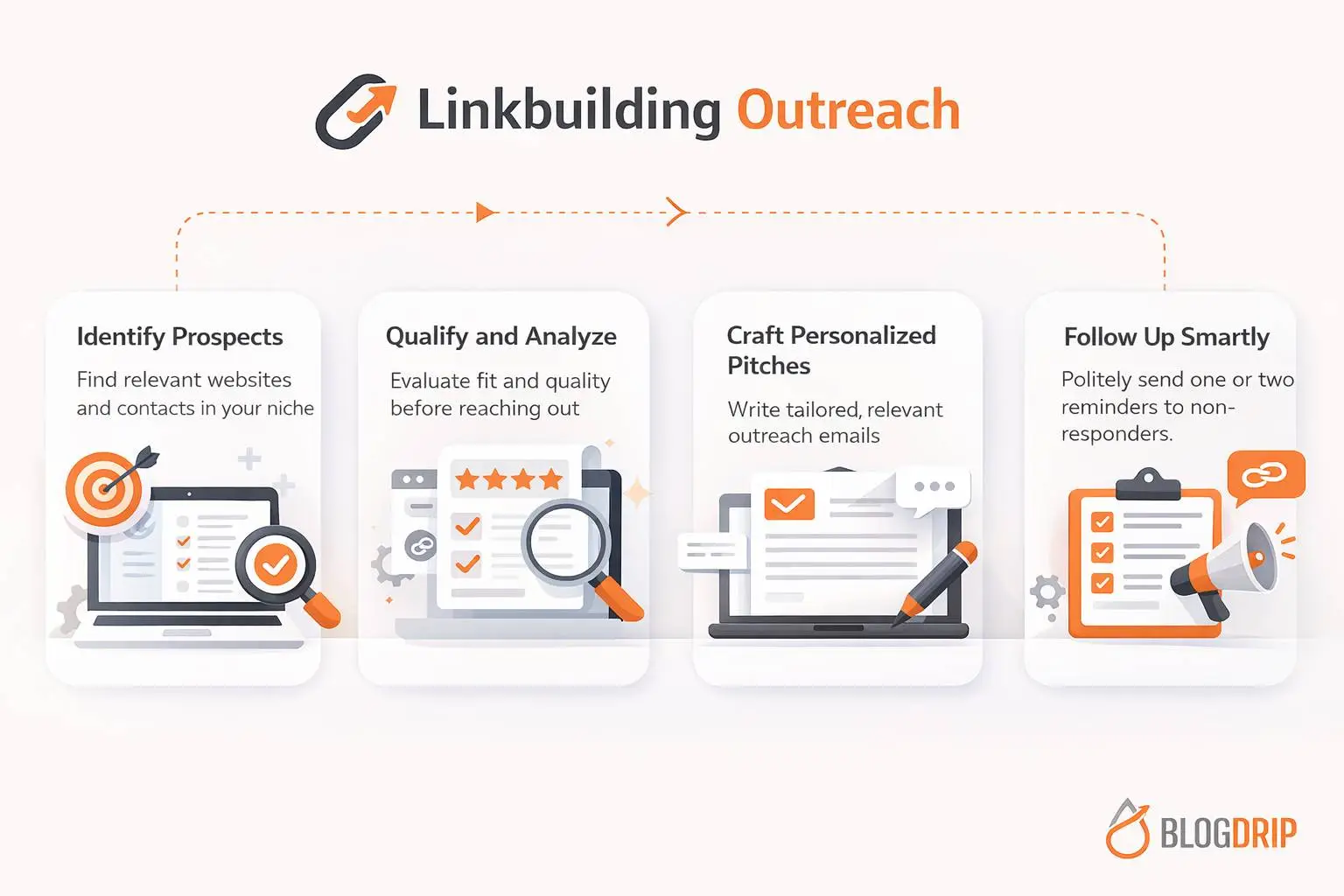
In practical terms, outreach usually involves:
- identifying relevant websites or publishers
- evaluating whether they are a realistic fit
- choosing a page or asset worth promoting
- writing a concise, credible pitch
- following up appropriately
- measuring results and refining the process
That means outreach is not separate from content strategy. If the target page is weak, generic, or misaligned with the prospect’s audience, the outreach will struggle no matter how polished the email is.
A good outreach campaign starts long before the first message is sent.
Why Linkbuilding Outreach Matters
Linkbuilding outreach matters because even high-quality content often needs promotion before it earns visibility and backlinks. Valuable pages do not always attract links automatically, especially on newer sites or in competitive niches.
It helps strong content get discovered
Many websites publish useful guides, research, or resources that remain invisible simply because the right people never see them. Outreach helps place those assets in front of publishers, bloggers, journalists, and editors who may have a legitimate reason to reference them.
It supports backlink acquisition strategically
Not every backlink is earned passively. In many cases, websites need to actively promote content to relevant audiences before links happen. Outreach creates that bridge between a valuable asset and the people most likely to cite it.
It improves the return on content investment
If a business invests in high-quality content, research, or linkable assets, outreach helps increase the chances that those assets generate SEO value beyond their own rankings. A good page can attract backlinks, referral traffic, brand mentions, and stronger authority signals when it is promoted intelligently.
It complements a broader SEO structure
Outreach is most useful when it supports important pages in your wider site architecture. A strong backlink to a cluster page, pillar page, or data-driven resource can strengthen the overall topic area, especially when internal linking is well planned.
How Linkbuilding Outreach Works
Effective linkbuilding outreach is a structured process, not a one-step tactic.
Start with the right page
Before building a prospect list, identify what you are promoting. Not every page is suitable for outreach.
The strongest outreach targets usually include:
- original research
- in-depth guides
- useful tools or templates
- curated resources
- expert commentary
- data-driven assets
- clear educational content that improves existing discussions
Trying to promote a thin article or a page that exists mainly to rank for a keyword usually produces poor results. Outreach works best when the page offers real editorial value.
Find relevant prospects
Once you have a page worth promoting, the next step is prospecting. This means identifying websites that are topically relevant and likely to link out in context.
Relevance matters more than raw domain metrics. A modest but highly relevant site can be a better target than a large publication with no meaningful fit.
Useful outreach prospects often include:
- blogs covering the same subject area
- journalists writing about related topics
- publishers with resource pages
- sites linking to similar assets
- websites with outdated references your page could replace
- authors covering adjacent subtopics
This is where competitor analysis can help. Reviewing which pages attract backlinks in your niche often reveals the kinds of sites that are willing to cite useful content.
Assess fit before outreach
Not every prospect should be contacted. A strong outreach process includes filtering for quality and fit.
Ask questions like:
- Is the site relevant to the topic?
- Does it publish content where links like this make sense?
- Does the page already link to similar resources?
- Would this audience genuinely benefit from the asset?
- Is there a specific editorial angle for the pitch?
This step matters because poor-fit outreach wastes time and damages response rates.
Write a credible pitch
The outreach email should be concise, specific, and grounded in a clear reason for contact.
Strong outreach messages usually do three things well:
- show that the sender understands the recipient’s content
- explain why the suggested page is relevant
- make the request feel editorially reasonable, not forced
The most common mistake is sending generic templates that sound mass-produced. Personalization does not mean adding the recipient’s first name and little else. It means demonstrating actual relevance.
Follow up carefully
Follow-ups can improve results, but only when they are measured. One or two polite follow-ups may be reasonable. Repeated pressure usually hurts more than it helps.
Good outreach respects the recipient’s time. If there is no response after a sensible follow-up sequence, it is better to move on than to continue forcing the interaction.
Important Subtopics Within Linkbuilding Outreach
Outreach relevance
Relevance is one of the most important variables in outreach success. A pitch that aligns closely with the recipient’s content, audience, and editorial standards is far more likely to work than one based purely on link metrics.
Topical relevance also affects the SEO value of the link itself. A contextual link from a site in the same subject area is usually more meaningful than a backlink from an unrelated source.
Linkable assets
Outreach works best when the page being promoted has genuine citation value. This is why linkable assets matter so much in linkbuilding.
A guide, study, template, or useful reference page gives outreach a purpose. Without that value, the outreach becomes little more than a request for a favor.
This is also why linkbuilding outreach should be connected to content planning. Pages created with genuine usefulness are easier to promote later.
Anchor text and editorial context
Good outreach does not try to dictate exact-match anchor text aggressively. In most cases, natural editorial placement matters more than controlling the wording.
When links are earned properly, anchor text tends to vary. That is usually healthier than trying to force repetitive keyword-heavy anchors that may look manipulative.
Relationship-driven outreach
Not all outreach needs to be purely transactional. In some industries, repeated interaction with relevant publishers, writers, and site owners can improve long-term opportunities.
This does not mean networking for its own sake. It means treating outreach as communication with real people rather than a one-time extraction tactic.
Common Linkbuilding Outreach Mistakes
Promoting pages that are not worth linking to
A weak page is the most common reason outreach underperforms. If the content is generic, outdated, or indistinguishable from what already exists, prospects have little reason to respond.
Prioritizing scale over relevance
Large prospect lists often look productive, but low-fit outreach usually leads to low response rates and poor-quality links. A smaller, better qualified list often performs better.
Overusing templates
Templates can improve efficiency, but they become a problem when every message sounds automated. Outreach should still feel contextual and human.
Making the pitch about yourself
Most recipients do not care that you published a new article. They care whether it improves their page, supports their readers, or adds something useful. Outreach should focus on value, not self-promotion.
Asking too much, too quickly
An outreach email that is too long, too demanding, or overly persuasive can reduce credibility. The strongest pitches are often simple and specific.
Ignoring site quality
Not every backlink opportunity is worth taking. Outreach should not focus only on acquisition. It should also filter out low-quality, irrelevant, or spam-heavy websites that do not support long-term authority.
Practical Guidance for Doing Linkbuilding Outreach Well
A strong outreach process is disciplined, selective, and content-led.
Build outreach around assets, not just keywords
A page created only to target a keyword is not automatically a good outreach target. The best outreach pages have something that makes them worth referencing beyond SEO alone.
Create smaller, better prospect lists
Instead of scraping thousands of contacts, build focused prospect lists based on topic relevance, editorial fit, and realistic opportunity. This usually improves both efficiency and results.
Use competitor research intelligently
Look at who links to similar assets in your niche. This can reveal useful patterns about formats, publications, and audiences that respond well to certain types of content. The goal is not to copy every link source, but to understand the landscape.
Keep outreach concise
A good email does not need to over-explain. It should quickly establish relevance, mention the useful asset, and make a reasonable suggestion.
Connect outreach to internal SEO strategy
When an outreach target earns links, make sure that page contributes to the wider site structure. A linked cluster page should connect naturally to the broader pillar topic and related supporting content. This helps the value of earned backlinks support more than one page.
Measure the right outcomes
Do not judge outreach only by reply rates. Better measures include:
- quality and relevance of links earned
- ranking improvement for promoted pages
- growth in referring domains
- referral traffic from placements
- visibility gains across connected topic areas
A campaign with modest response volume can still be successful if it earns strong, relevant editorial links.
Timing and Expectations
Linkbuilding outreach rarely produces immediate SEO gains. Even after a link is secured, it can take time for search engines to crawl, process, and reflect its impact.
Response rates also vary widely depending on the niche, the quality of the asset, the credibility of the sender, and the relevance of the prospect list. Many campaigns underperform because expectations are unrealistic. Outreach is not a guarantee of backlinks. It is a process for improving the probability of earning them.
Results tend to be stronger when outreach is repeated consistently, supported by high-quality assets, and tied to a broader content and authority strategy. Like most SEO work, outreach compounds over time rather than delivering instant wins.
Conclusion
Linkbuilding outreach is not about sending large volumes of email and hoping for links. It is about promoting genuinely useful pages to relevant people in a way that makes editorial sense.
The strongest outreach campaigns begin with content worth citing, use careful prospect selection, and keep relevance at the center of every pitch. That makes outreach more credible, more efficient, and more likely to earn backlinks that actually support SEO performance.
For a site building topical authority, linkbuilding outreach should reinforce the broader structure of the website. It should help important pages gain external trust, strengthen connected content through internal links, and contribute to long-term authority rather than short-term link counts. That is what makes linkbuilding outreach strategically valuable.