
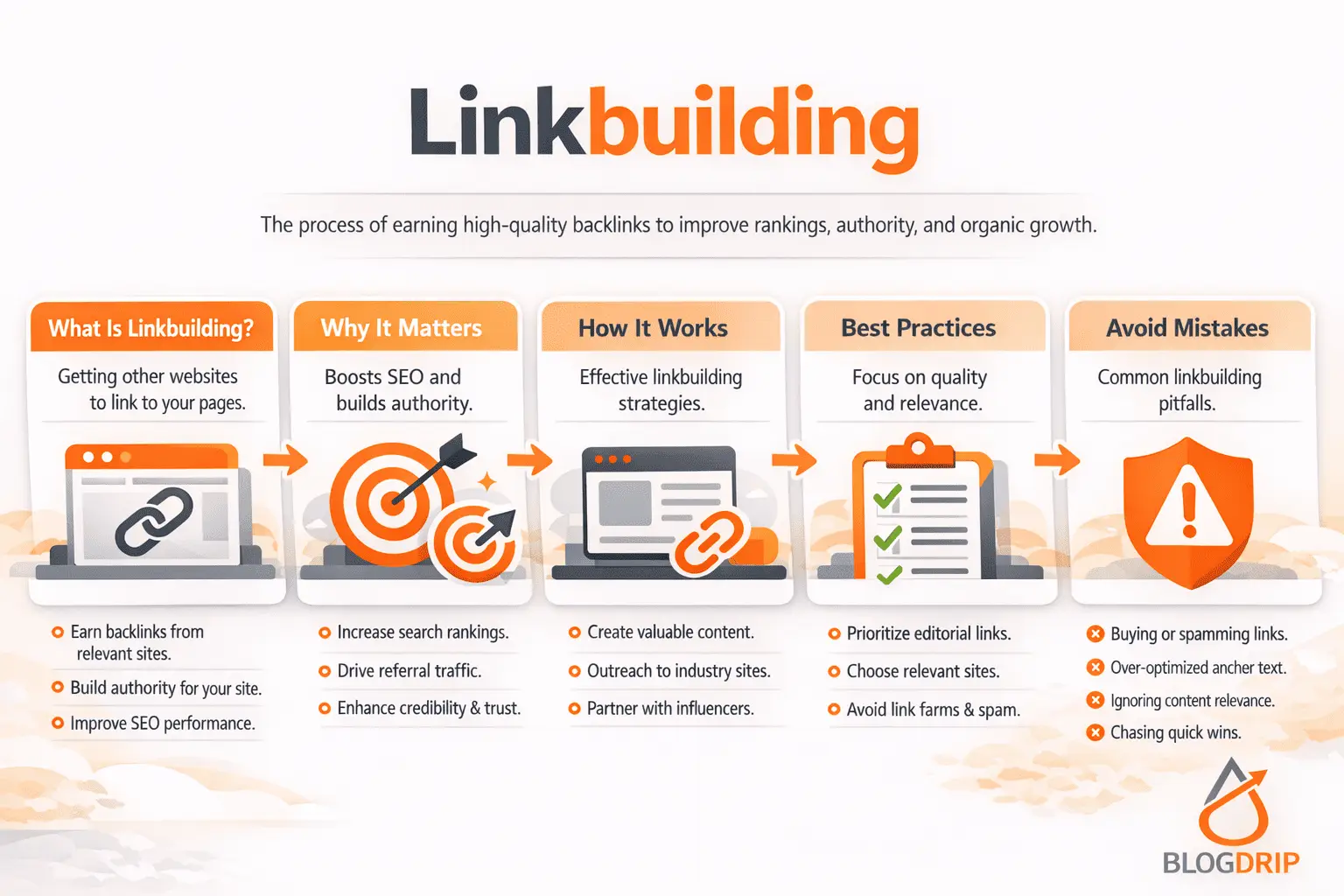
A Strategic Guide to Building Authority, Rankings, and Sustainable Organic Growth
Link building remains one of the most debated parts of SEO because it sits at the intersection of strategy, trust, editorial quality, and risk. Many businesses know they “need backlinks,” but far fewer understand what good link building actually looks like in practice. That gap is where many campaigns go wrong.
At its best, link building is not about collecting as many links as possible. It is about earning relevant signals of authority that help search engines understand why your website deserves visibility. Strong links can support rankings, strengthen topical authority, improve discovery, and increase trust in the eyes of both users and search engines. Weak links, manipulative tactics, and poorly targeted outreach usually do the opposite.
For companies building organic growth seriously, link building should not be treated as a standalone tactic. It works best when it supports a broader SEO system: strong information architecture, useful content, clear expertise, and pages that genuinely deserve to be cited.
This pillar page explains what link building is, why it matters, how it works, which subtopics matter most, where businesses make mistakes, and how to approach it in a way that is realistic, effective, and sustainable.
What Is Link building?
Link building is the process of acquiring hyperlinks from other websites to your own. In SEO, those links act as signals that can help search engines evaluate a page’s credibility, relevance, and authority.
In practical terms, link building is about increasing the number and quality of external websites that reference your content. But that definition is still too broad to be useful. Not all links carry the same weight, and not all links are beneficial.
A useful link typically has several characteristics:
- It comes from a relevant website or page
- It appears in an editorial context
- It adds value for readers
- It points to a page that deserves to be referenced
- It is placed naturally, rather than artificially
That is why serious link building is closely connected to content strategy, digital PR, brand positioning, and topical authority. If your website publishes expert resources that solve real problems, link building becomes easier and more defensible. If your site has thin pages with little original value, even aggressive outreach will have limited long-term impact.
Link building vs. Link Acquisition
These terms are often used interchangeably, but there is a subtle difference.
Link acquisition is the broader outcome: getting links. Link building usually implies the strategic work behind that outcome, such as content creation, outreach, partnerships, asset development, and authority-building activity.
That distinction matters because good SEO teams do not chase links in isolation. They build conditions that make links more likely.
Link building Is Not Just “Getting Backlinks”
The worst version of link building is transactional and shallow. It focuses on volume, exact-match anchors, and quick wins with little regard for quality or intent. That approach may create short-term movement in some cases, but it rarely produces durable authority.
Real link building is closer to reputation building. It asks a harder question: why would a credible website want to reference this page?
That question should shape every campaign.
Why Linkbuilding Matters
Link building matters because links still play an important role in how search engines evaluate websites and pages. Search performance depends on many signals, but backlinks remain one of the clearest off-page indicators of authority and trust.
If two pages target a similar keyword and one has significantly stronger, more relevant backlinks, it often has a competitive advantage. That does not mean links override everything else. A poorly structured or low-quality page will not rank simply because it has backlinks. But when content quality is already strong, links often become the differentiator.
How Link building Supports SEO Performance
It Strengthens Authority Signals
Backlinks help search engines understand that other websites view your content as worth referencing. When relevant sites link to your page, they reinforce the idea that your content has value within its topic area.
Over time, this contributes to broader domain and topical authority, especially when links point to strategically important pages such as core service pages, commercial landing pages, and in-depth informational assets.
It Improves Ranking Potential
Competitive keywords are rarely won on-page alone. Search intent, content depth, internal linking, and technical quality matter, but off-page authority often influences which pages break into top positions.
This is especially true in industries where established publishers, software companies, or major brands already dominate the search results.
It Supports Content Discovery
Links can also help search engines discover and revisit pages more efficiently. While discovery is not the same as ranking, strong internal and external linking together can improve how content is crawled and connected across the web.
It Creates Referral and Brand Value
Not every SEO benefit is purely algorithmic. A well-placed link on a respected site can send qualified referral traffic, expose your brand to a relevant audience, and create secondary benefits such as mentions, citations, and future earned links.
This is one reason digital PR and brand-led SEO have become increasingly important in modern link building.
How Link building Works
Link building works when you combine three elements: a link-worthy asset, the right target websites, and a credible reason for placement.
That sounds simple, but each of those elements requires strategic work.
Start With Pages Worth Linking To
Many businesses begin link building too early. They start outreach before they have created pages that deserve links. That usually results in low response rates and poor-quality placements.
Before building links, review whether the destination page has clear value. Strong link targets often include:
- original research or expert insights
- comprehensive guides
- useful tools or calculators
- category-defining pillar pages
- opinionated industry analysis
- unique data, examples, or frameworks
If a page says nothing new, explains nothing clearly, and adds little beyond what already exists, external websites have no real reason to cite it.
For this reason, link building should be aligned with your content cluster strategy. A strong pillar page on link building, for example, can support related cluster content on anchor text, guest posting, digital PR, broken link building, link audits, toxic backlinks, and outreach strategy. That makes your link acquisition efforts more scalable because you are not relying on one isolated article.
Identify the Right Link Prospects
Relevance matters more than many teams admit. A link from a random website with no topical or audience connection may have little strategic value, even if the site appears “powerful” on paper.
Good prospecting usually focuses on:
- websites covering related topics
- publishers in your industry
- blogs or media sites with editorial standards
- resource pages that reference useful guides
- journalists and editors interested in expert commentary
- companies, partners, associations, or suppliers with natural relationship context
The goal is not just to find any website that can place a link. It is to find websites where a link would make sense editorially.
Create a Reason to Reach Out
Outreach works best when the recipient can immediately understand why your page is relevant to their audience. Generic templates fail because they make the sender’s goal obvious and the recipient’s benefit unclear.
A credible outreach angle might include:
- suggesting a genuinely relevant resource
- offering expert commentary or proprietary insight
- contributing a strong editorial piece
- highlighting outdated or broken resources they currently reference
- sharing new research or data
- providing a better supporting source for an existing topic
This is where quality matters. If the pitch is weak or self-serving, the campaign becomes noise.
Earn, Build, and Attract Links Over Time
Not all links come from direct outreach. Some are earned because your content becomes useful enough to attract citations naturally. Others come from PR, partnerships, expert contributions, speaking opportunities, industry roundups, directories, or reclaiming unlinked brand mentions.
In practice, the best link building strategies mix proactive and passive acquisition. You build assets intentionally, promote them selectively, and create a site architecture that helps earned authority flow through internal links.
Important Link building Subtopics
A pillar page should not treat link building as one tactic. It is a broader discipline made up of several connected areas.
Anchor Text Strategy
Anchor text is the clickable text used in a link. It helps users and search engines understand the context of the linked page.
A healthy anchor text profile is varied and natural. It includes branded anchors, URL anchors, topical phrases, generic anchors, and occasional keyword-relevant anchors where they genuinely fit. Overusing exact-match keywords is one of the clearest signs of manipulative link building.
A good anchor text strategy is not about forcing keywords into every backlink. It is about maintaining a natural profile that reflects how people actually reference brands and resources.
This is an area where many businesses over-optimize and create unnecessary risk.
Digital PR
Digital PR is one of the most effective modern approaches to link building because it focuses on earning coverage rather than simply asking for placement. Strong campaigns use data, expertise, original stories, or expert commentary to secure links from news sites, industry publications, and relevant media outlets.
This approach tends to produce stronger editorial signals than low-effort outreach because the link exists within a real publishing context.
For many brands, digital PR is the bridge between content marketing, brand authority, and SEO performance.
Guest Posting
Guest posting still has a place in SEO, but only when done selectively and with genuine editorial standards. Publishing thoughtful content on relevant websites can support visibility, relationships, and authority.
The problem is that guest posting has also been abused heavily. Low-quality guest post networks, thin articles, and purely transactional placements often add little value and can create footprint issues.
Guest posting works best when the publication is credible, the topic is relevant, and the article would be worth publishing even without the backlink.
Broken Link building
Broken link building involves identifying dead outbound links on other websites and suggesting your own relevant content as a replacement.
This tactic can work because it helps the site owner improve their page while giving you a legitimate reason to reach out. However, success depends on relevance and execution. If your replacement content is weak or only loosely related, the pitch will be ignored.
Broken link building is often more effective for resource content than for commercial pages.
Link Reclamation
Not every link opportunity starts from scratch. Sometimes the fastest wins come from reclaiming value you have already earned.
This can include:
- unlinked brand mentions
- incorrect links pointing to broken URLs
- lost backlinks after site migrations
- outdated references to removed content
- mentions in partner or membership pages that never linked properly
Link reclamation is often overlooked because it feels less exciting than outreach, but it can be one of the most efficient parts of a link building program.
Internal Linking and Link Equity Distribution
External links do not create full value in isolation. Your internal linking structure determines how that authority flows through the site.
If your strongest backlinks point to blog posts that are disconnected from your commercial pages, the broader SEO impact may be limited. This is why link building and internal linking should always be planned together.
A well-built pillar-and-cluster structure helps distribute authority logically. Pillar pages can attract links at scale, while internal links pass relevance and equity to supporting cluster pages and related commercial content.
That is one of the clearest strategic reasons to build topic clusters rather than isolated articles.
Common Link building Mistakes
Many link building failures come from bad assumptions rather than bad effort.
Chasing Metrics Instead of Relevance
Teams often overvalue third-party authority metrics and undervalue topic fit. A link from a highly relevant, well-edited niche publication may be more valuable than a link from a larger but unrelated site.
Metrics can help with prioritization, but they should not replace editorial judgment.
Building Links to Weak Pages
If the page is thin, outdated, generic, or poorly aligned with search intent, backlinks will not solve the core issue. Link building amplifies strong assets. It does not rescue weak ones.
Using Over-Optimized Anchor Text
Aggressive exact-match anchors can distort your backlink profile and make the campaign look artificial. Natural variation is safer and usually more realistic.
Treating Link building as a Separate Department
Link building works best when connected to content, PR, brand, and technical SEO. When it is isolated, opportunities get missed. Research is not turned into assets. PR stories are not aligned with search goals. Internal links are not planned. The result is fragmented effort.
Buying Low-Quality Links at Scale
This is still common because it appears efficient. In reality, it usually creates poor placements, weak editorial context, and long-term cleanup problems.
The real issue is not just policy risk. It is strategic weakness. Low-quality paid links rarely build the kind of authority that serious websites need.
Ignoring Link Audits and Maintenance
A backlink profile should not be treated as static. Links disappear, redirects break, site structures change, and legacy tactics leave footprints. Regular audits help you understand what is helping, what is neutral, and what may need attention.
Practical Guidance for a Strong Link building Strategy
Good link building starts with prioritization. Not every page needs backlinks, and not every website is equally worth targeting.
Start by identifying:
- your highest-value commercial pages
- your strongest informational assets
- the cluster topics that can attract links naturally
- the authority gap between your site and top-ranking competitors
From there, build a plan around the pages most likely to create strategic impact.
Focus on Linkable Assets First
If your site lacks strong informational resources, create those before scaling outreach. In many industries, the best link targets are not sales pages but expert guides, research content, tools, and category-level resources.
A strong pillar page can become the center of this effort, supported by cluster articles that go deeper into subtopics such as outreach emails, anchor text, digital PR campaigns, backlink audits, and competitor link analysis.
Match Tactics to the Type of Page
Different pages need different linkbuilding approaches.
A research-led asset may perform well with digital PR. A practical guide may work better for outreach and resource page inclusion. A service page may need authority passed internally from linked informational content rather than direct cold outreach.
This is where maturity matters. Good SEO strategy does not force one tactic onto every page.
Build Relationships, Not Just Placements
Many of the best links come from relationships with editors, journalists, partners, associations, communities, and industry experts. Transactional outreach is easier to scale, but relationship-based link building often creates better outcomes over time.
This is slower, but usually more durable.
Measure More Than Link Count
The wrong KPIs lead to the wrong behavior. Counting links alone does not tell you whether the campaign is improving organic performance.
Useful evaluation should include:
- ranking movement for target pages
- organic traffic growth
- improved visibility for topic clusters
- quality and relevance of linking pages
- referral traffic where applicable
- contribution to commercial pages through internal linking
A campaign with fewer but stronger links can outperform a high-volume campaign by a wide margin.
Timing and Expectations
Link building is not instant, and it should not be sold that way. Results depend on the competitiveness of the niche, the quality of the site, the strength of the assets, and the authority gap you are trying to close.
In most cases, meaningful SEO impact takes time. You may secure placements relatively quickly, but ranking improvements often depend on how those links interact with your content quality, internal linking, crawl patterns, and overall site authority.
For newer websites, link building is usually part of a longer authority-building process. For established sites, it may help unlock pages that are already close to ranking well but need stronger external signals.
The most realistic expectation is not a sudden jump from no visibility to dominance. It is gradual improvement when links are built to the right pages, in the right way, alongside strong on-site SEO.
Conclusion
Link building is still a core part of SEO, but the standard for doing it well is much higher than it used to be. The goal is not to manufacture authority. It is to earn and strengthen it.
That requires better content, clearer strategy, stronger editorial judgment, and a more integrated view of SEO. Links work best when they support pages that deserve visibility, fit into a logical site architecture, and reinforce genuine expertise.
For businesses that want sustainable organic growth, the most effective link building strategy is usually the least gimmicky one. Build assets worth citing. Promote them intelligently. Support them with strong internal linking. Focus on relevance, trust, and long-term authority rather than shortcuts.
That is how link building becomes more than a tactic. It becomes a durable competitive advantage.